Research Highlights
Underwater & Acoustic Science
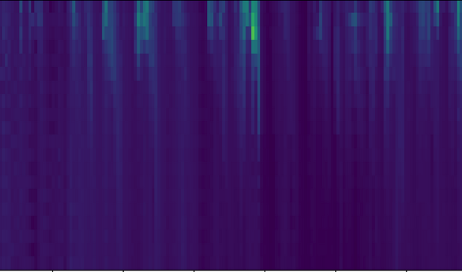
Underwater acoustics is central to sensing, communication, and imaging in environments where optical methods are limited. By analysing the behaviour of sound in water, researchers can characterise sub-surface structures, detect environmental changes, and develop more reliable systems for marine exploration.
Our work consists of three strands:
- Characterising the physical underwater environment, at every spatial and temporal scale.
- Computing and modelling acoustic behaviour in the physical underwater environment.
- Developing advanced acoustic and multimodal systems for imaging, mapping, data acquisition, and communications.
Biomedical & Assistive Ultrasound
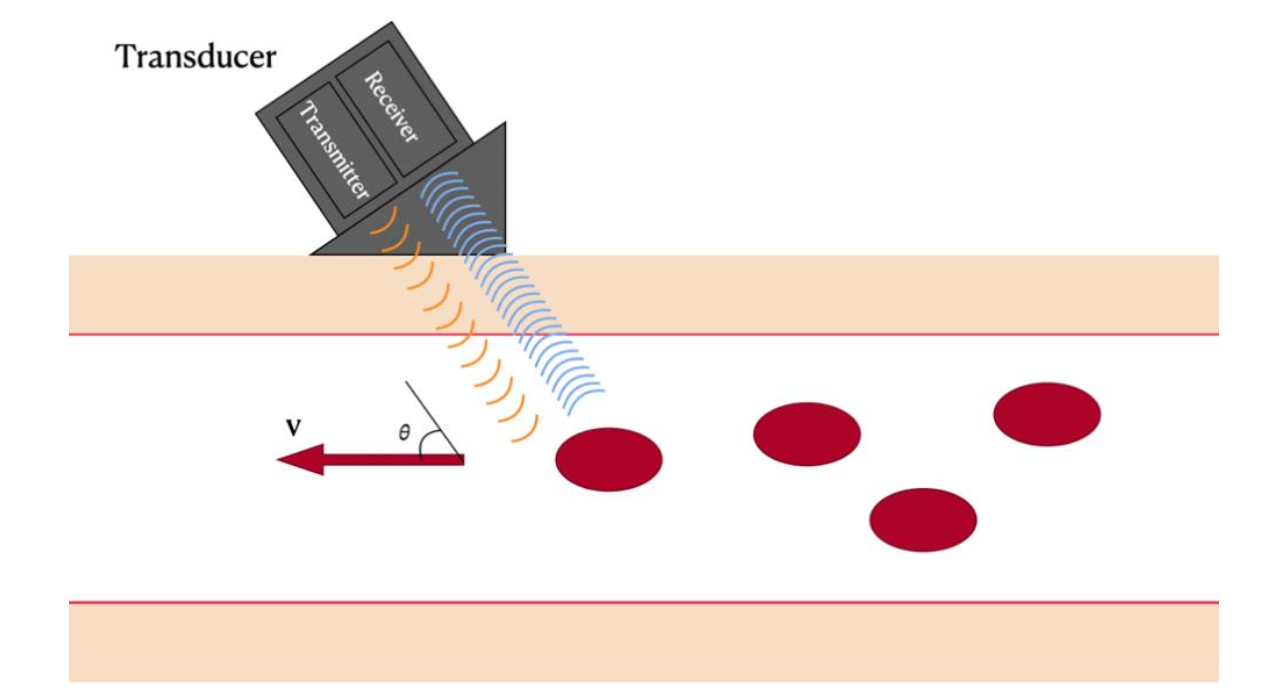
Biomedical ultrasound plays a critical role in non-invasive diagnosis and physiological monitoring. By analysing blood flow, tissue motion, and acoustic biomarkers, researchers can build systems capable of supporting early diagnosis and improving clinical decision-making.
Our research supports the development of portable diagnostic platforms, including compact ultrasound systems for haemodynamic assessment and stroke-risk prediction. We are also advancing assistive technologies that use spatialised audio cues to enable intuitive navigation for visually impaired users, combining transducer design, physiological modelling, and psychoacoustics.
Sonoelectrochemistry & Materials
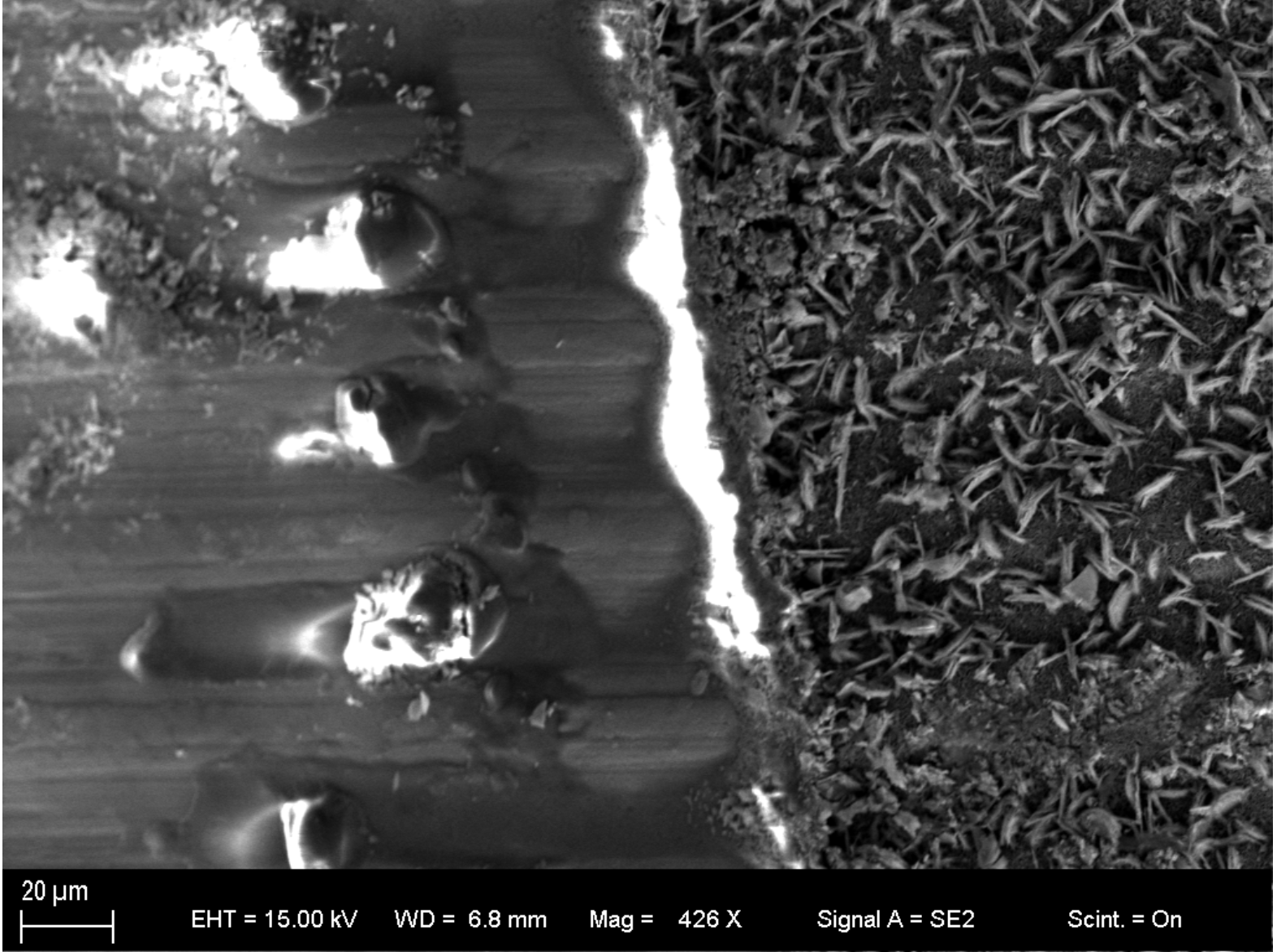
Sonoelectrochemistry uses ultrasonic energy to enhance electrochemical reactions, improving material deposition and reaction kinetics. By controlling cavitation and acoustic streaming, we can influence particle transport and surface morphology.
Our research investigates ultrasonic agitation for industrial electroplating, aiming to optimise bubble dynamics and shear forces to achieve high-uniformity metal coatings. This work combines experimental measurements with modelling to provide practical solutions for manufacturing and materials science applications.
Machine Learning & Intelligent Sensing
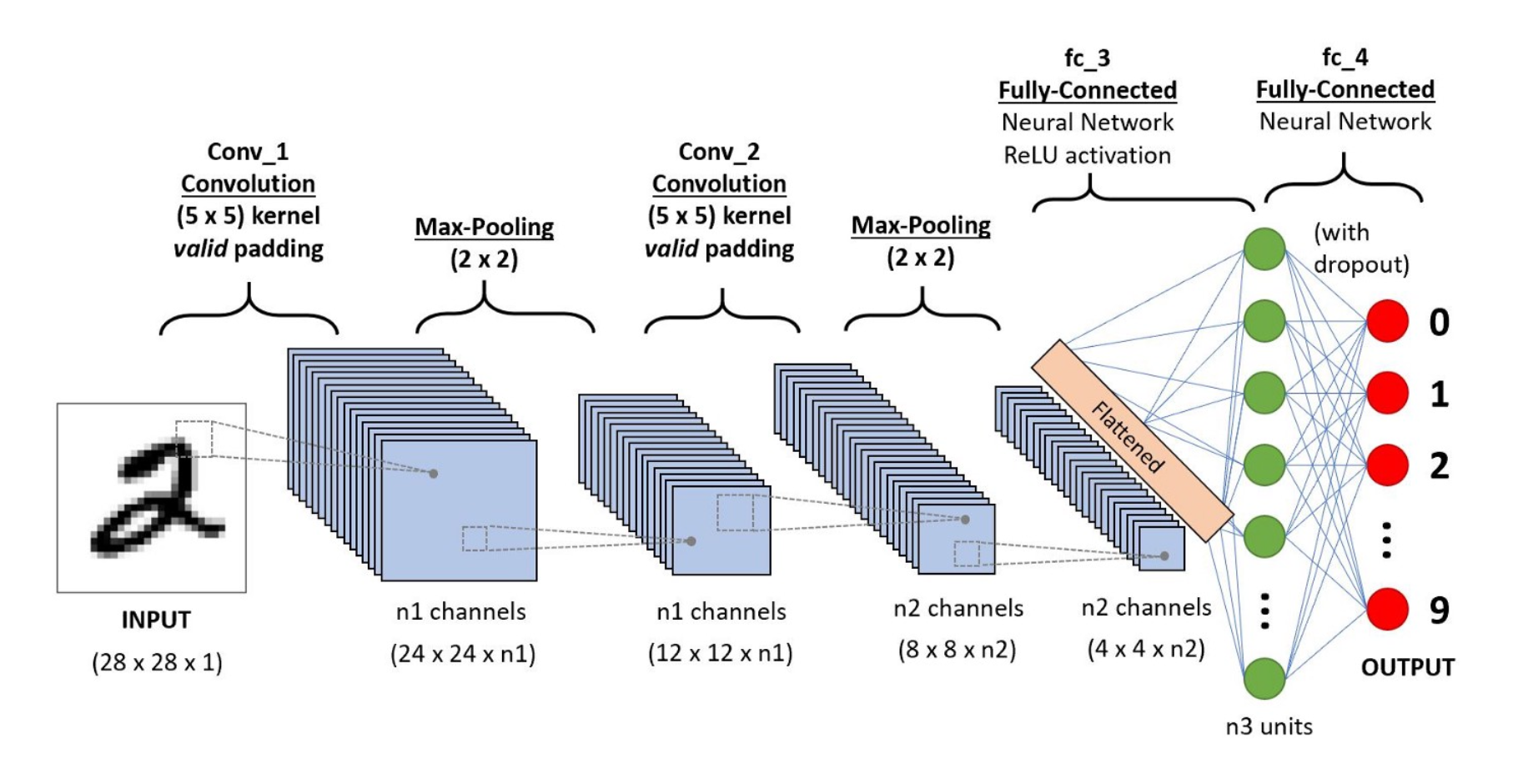
Machine learning is increasingly applied to interpret complex sensor data, enabling automated detection, classification, and prediction in real-time systems. Intelligent sensing enhances both efficiency and reliability of monitoring tasks.
Our work includes AI-driven classification of steels and sub-surface defect detection using acoustic data, as well as predictive maintenance systems for industrial leak detection. By integrating advanced algorithms with sensor networks, we are improving the accuracy, speed, and scalability of monitoring across diverse engineering applications.
Student Papers
05/06/2023 – D. Baraskiewicz
Applications of Fractal Geometry in DNA and Genome Studies
In this paper I will cover some methods involving fractal geometry that are used in the analysis of DNA sequences. This paper will have a particular focus on the identification and study of VNTRs (Variable Number of Tandem Repeats), which are repeated sequences of nucleotides within a DNA sequence. The ability to identify VNTRs and their location within a DNA sequence leads to many applications, which are covered in the conclusion. This paper will also be concerned with the identification of other properties such as long-range power law correlations, patches and coding/non-coding regions. The Indicator Matrix method, the DNA walk and Detrended Fluctuation Analysis are explored, with the Indicator Matrix Method chosen as the most effective.
02/12/2022 – H. Pearson
Combinatorial Games
We begin by developing the standard theory of normal play impartial games. Then misère quotients are introduced, which we will use to prove a powerful periodicity theorem for both normal and misère octal games. Finally, we develop the nim product to form the field of nimbers and solve a related computationally interesting game using using the tartan theorem.
07/02/2022 – M. A. Vogiatzi
Acoustic Metamaterials and Future Research Challenges
In this work, we explore acoustic metamaterials (AMM), a fairly new and active field of research. Initially, we present an overview of the advances in the field and explain the metamaterial properties. Then, we delve further and focus on the sound absorption and insulation applications of these materials. Finally, we report on the current state of knowledge, present the problem of the narrow band efficiency of AMM and give possible solutions based on the literature.
20/12/2021 – X. Yin
A Review of AMR Effects in FM Semiconductors
Anisotropic magnetoresistance (AMR) is a property of magnetic materials that has many applications in the field of spintronics. This review firstly describes the basic physics of the phenomenon, then provides an insight on the useful applications of this effect in the field of spintronics. Finally, a few summaries of recent research being carried out to understand the effect of AMR in semiconductors, in particular, the ferromagnetic(FM) semiconductor GaMgAs (gallium manganese arsenide), are given. The summaries focus on two widely studied advancements of AMR research: enhancing the Curie temperature and observing TAMR effects in GaMgAs. A conclusion and speculations about future research direction are included at the end.
20/12/2021 – M. Draskovits
The Role of Nanoradios and Nanosensors in Scientific Observation
We have decided to diverge from the structure of scientific articles in the presentation of this work, voting for an in medias res approach on practical research which might better serve the needs of the reader. Focusing on the benefits of nanotechnology in delivering scientific measurements, we attempt to give an overview on nanosensors and nanoradios, their role in observation and future potential applications. We shall introduce the fundamentals of nanoscience to allow readers a deeper understanding of the topic. In this article, we define nanosensors as devices, capable of measuring at least one parameter, with a size not exceeding 100 nm, although some authors also include any equipment beyond this size limit that can be used to measure properties on this scale.
05/2021 – O. Daisey
Quadratic Forms, K-Theory and Galois Cohomology
We present an account of the basic theory of quadratic forms, central simple algebras over a field, and Milnor’s K-theory, which culminates in a complete exposition of Alexander Merkurjev’s 2006 proof of the norm residue homomorphism of degree two.
04/2019 – D. L. Fairbairn
Computational Methods in Graph Connectivity
Connectivity invariants aim to give a quantifiable measure of robustness to analyze the effect of failure on a network. This report introduces the notions of vertex and edge connectivity of a graph, giving explicit steps for their calculation. Whitney’s Inequality relates these connectivity invariants and the minimal vertex degree. Fundamental theorems in connectivity, such as, Menger’s Theorem, Whitney’s Theorem and the duality between maximal flow and minimal capacity cuts will be discussed in-depth. A solution to the edge connectivity augmentation problem will be presented using the cactus representation. Construction of the cactus representation will be detailed in meticulous steps with a critical analysis of current literature. An introduction to the basic concepts of graph theory, graph representations, complexity theory and algorithmic problem solving are also included.
17/04/2018 – D. T. Dobrowolski
From Spinors to Twistors: Eliminating Redundancies in Scattering Amplitudes
The scattering amplitude of an interaction may be used to determine its cross-section and thereby the probability of its occurrence in a particle collider. Thus, a reliable computation of the scattering amplitude may easily be compared to experiment, thereby providing a useful tool for evaluating the successes and failures of the Standard Model. Ultimately this implies that highly accurate computation of scattering amplitudes could be particularly crucial in developing a more fundamental theory of particle physics. Scattering amplitudes, however, can be computationally expensive to calculate, especially for greater multiplicities
and at higher orders. This is a result of multiple redundancies present in the theory, which may be removed by a number of techniques that have been developed for this purpose. In this paper, an outline of some of these techniques is given and examples are provided so as to demonstrate their efficacy.